
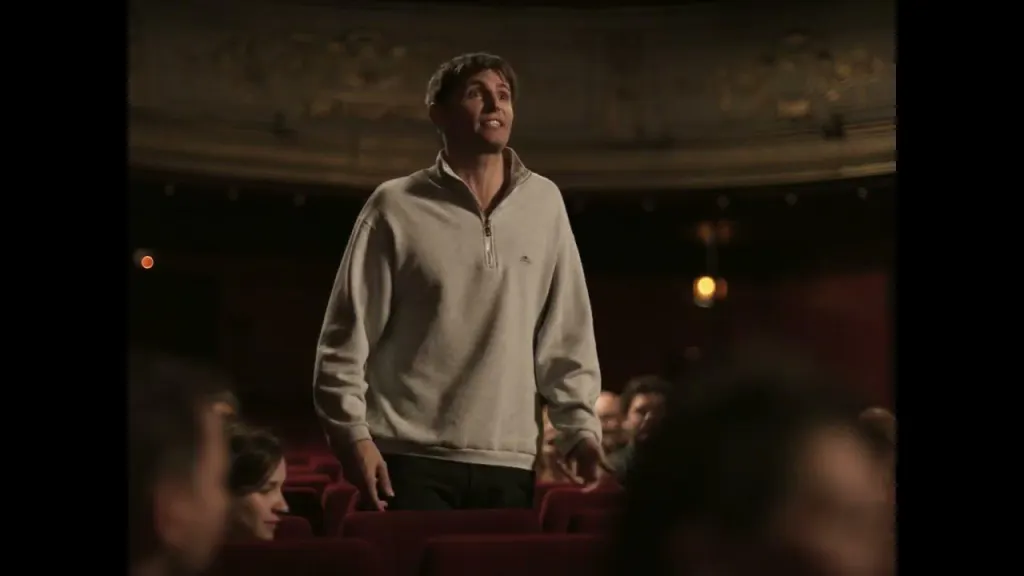
Improvisational theatre is a fantastic artistic discipline for many reasons. One of them is that it allows for a much healthier relationship between artists and the audience than in traditional scripted theatre.
French company La Morsure unerlines it in its online presentation:
“[Improvisation] makes the creative process visible to the audience and integrates it into the art work itself. The art work is both the painter and the canvas, both inseparable.”
With improvisation, there is no “fourth wall” anymore: the audience comes to see stories, certainly, but also a troupe of artists who have no idea what will happen in the next hour. As a result, the improv troupe cannot hide what goes on backstage! Improvisation is thus a fundamentally meta performance: we come to witness an endeavour of artists, their risk-taking, and their potential mishaps. The actors step down from their pedestals and position themselves as peers of the audience.
The improvisation audience is thus “allowed” to perceive the limitations and weaknesses of the performance, and does not feel “enjoined” to admire the work.
One might think that with this meta approach, theatre loses its sacred character. But in fact, the audience will experience a much more sincere and personal enthusiasm when a performance of this kind moves them and strikes them as successful.
With improvisation, the sacred nature of theatre no longer stems from intimidating devices (see previous article), but from the communion established between the audience and the artists.
This communion is reinforced by the fragility of the narrative, suspended by the choices made live by the artists. It also very often arises from the fact that the audience is invited to participate in the creation of the performance, to varying degrees.
Rethinking the distinction between actors and spectators.
Jacob Levi Moreno (1889-1974), the Austrian inventor of psychodrama, considered classical theatre—or “institutionalized theater,” as he called it—to be a zombie art, an enterprise of “cultural preservation.” Think about it: why do we so often limit ourselves to (re)presenting works written by other artists, most of whom are dead and buried? Why not let stories be born and live on stage, evolve, and adapt to the context of their performance? Jacob Levi Moreno wanted to move from a zombie theatre to a resolutely living theatre. For him, this meant improvisation. Within the framework of the Viennese Stegreiftheater (the “impromptu theatre“), he created various forms of performance designed to revitalize theatre. One of these was what he called “the theatre of the audience” or “theatre of conflict.” This involved placing the audience in a rebellious position: under the leadership of ringleaders, the spectators were encouraged to disrupt the mechanics of the canned text, challenge the legitimacy of the artists present on stage, the veracity of their roles, organize a mini-revolt, and even go so far as to replace them on stage!
Modern improvisational theatre presents a more restrained version of theatrical performance, but still strives to blur the line between artists on stage and spectators seated in the stands. Improvisers aim to “play with rather than play for,” as Hervé Charton puts it.
With improvisation, the audience rediscovers the pleasure of exchange and sharing: they no longer come just to receive something, they also come to give something. And it is this unique experience of communion that often makes them want to come back.
Could this be the secret to successful improvisation? Let’s start with the following hypothesis: the audience likes to contribute to the show they see. We might then think that to make an improvisation show more memorable, we simply need to maximize the power given to the audience.
Of course, it’s not that simple, far from it!
What power can we give to the audience in the context of a show?
That’s what I suggest we explore in this article!
An improv show is a political laboratory
As a reminder, the people who gather in a performance venue form an ephemeral community. This community has formed around a social contract established by the poster and the pitch of the show: let’s come together to live an aesthetic and emotional experience.
The distribution of roles among these individuals is equivalent to a distribution of power. In other words, it answers the question, “Who can do what, and when?”
In the traditional theatrical setting, the artists perform, and the audience passively receives. This is a model of technocratic aristocracy: specialists manage the performance on behalf of the entire community.
If we decide to involve the audience in the unfolding of the performance, we embark on the adventure of participatory democracy!
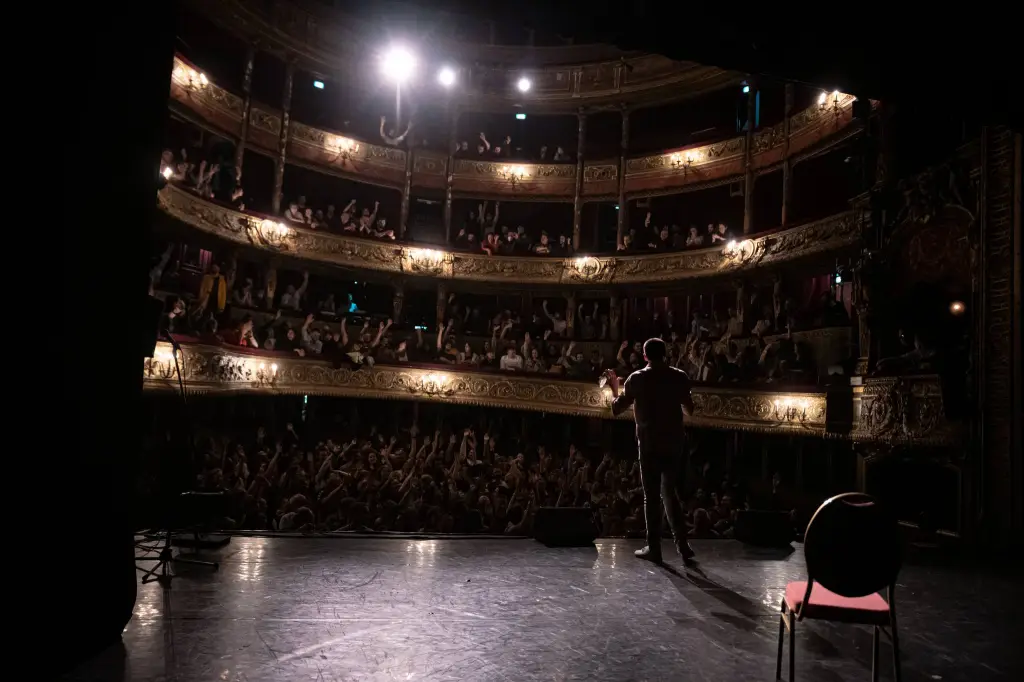
Splendor and Misery of Participatory Democracy
I am not aware of any research that has thoroughly examined the mechanisms of audience participation in theatrical performances and the power dynamics governing the relationships between artists and spectators.
Jacob Levi Moreno’s The Theatre of Spontaneity (1923) touches on this subject but is more of a political and philosophical essay. It is not a historical or scientific approach. Hervé Charton’s book, Alain Knapp and Freedom in Theatrical Improvisation: Channeling or Emancipating, addresses the question of the spectator’s role, but devotes only a few pages to it.
On the other hand, numerous scholarly works have analyzed the mechanisms of participatory democracy. This could be of interest to our discussion!
These works, in particular, highlight the limitations of this type of system. Overall, three main criticisms can be leveled against participatory democracy mechanisms. They are summarized by the most media-savvy French expert on this issue, Loïc Blondiaux:
- “In open participation mechanisms, there is an overrepresentation of the most integrated social groups and older people.”
- “It is crucial to pay close attention to the power imbalances created by the mechanisms themselves, such as unequal access to digital resources or the right to speak in public meetings, for example.”
- “Too many participatory mechanisms remain disconnected from the places where decisions are actually made, and too many initiatives fail because they have had no influence whatsoever on the political processes they were intended to join.”
Political scientist Alice Mazeaud also confirms that ‘the institutionalization of participatory democracy reflects less a broadening, and therefore a democratization, of local arenas than the consolidation of two parallel spaces: decision-making arenas with “limited pluralism” where cooperation between elites is organized on the one hand, and the increasingly professionalized staging of an “openness” to citizens through the proliferation of local forums on the other.’”
Let me summarize in plain language the three observations of political scientists:
- Even when, on paper, everyone can participate, those who actually show up are those with the time and money.
- The way people are involved excludes the shy and those who don’t understand the unspoken rules, and consequently, it favors the loudest voices.
- We pretend to consult people, but in reality, the main critical decisions have already been made. Do you remember the 2019 French Citizens’ Convention for Climate?
The trap of freedom of expression
It’s also crucial to understand that “involving people” isn’t simply about “giving them maximum freedom,” because that doesn’t work in practice.
Right-wing and far-right theorists tend to see freedom as the antithesis of equality: they believe that mechanisms guaranteeing equality must be dismantled in order to maximize freedom. This can be described as “negative liberty” (removing as many obstacles as possible), or labelled as a libertarian approach.
Right-wing activists empathize with members of the dominant class. And a policy of equality and rights reduces the agency of these individuals. Left-wing activists, on the other hand, empathize more with the individuals whose agency is hampered by mechanisms of domination. They therefore believe that freedom rests on equal rights and regulatory mechanisms.
Let’s return to the libertarian approach: minimizing equality (the guarantee of rights) leads to a strengthening of the dynamics of domination and oppression. Without regulation, the most powerful citizen can easily silence and crush the weakest.
These mechanisms were at work, for example, in the context of the deregulation of social media platforms. The deregulation of the social network Twitter/X led to a partial exodus of users in 2022 and late 2024, primarily within the scientific and left-wing activist community.
This illustration takes a detour from the world of theatre and decision-making insitutions, but it exposes crucial mechanisms: if we decree overnight that there are no more rules and that everyone can act, it leads to chaos and the monopolization of speech by the loudest voices.
One might wish for this outcome, but for me, it describes a bad political system (and bad theatre).
I illustrated the beginning of this article with excerpts from the film Yannick (2023), where a theatergoer revolts and demands that the troupe change their script. Challenging the sacred status of artists stems from an interesting and legitimate logic, but the character of Yannick quickly descends into despotism: he literally takes the entire audience hostage. The film shows that the other members of the audience can be perfectly content with the classic theatrical contract and simply want to enjoy their role as passive recipients of the work. The rebellion of just one of them caused violence to the rest of the group.

The success of participatory democracy depends on regulation and empowerment of all citizens
How do we achieve a successful democratic participation system? It relies on effective rules for working together and on preliminarly empowering community members.
Common rules of behavior
Participatory processes are structured by a set of rules that ensure the equitable distribution of speaking time and decision-making.
This involves establishing speaking time limits, defining appropriate voting systems, using random selection to prevent the most privileged or influential individuals from monopolizing the floor, and employing non-intrusive communication methods (such as replacing applause with raised hands or adopting systems of non accumulation of power like the talking stick).
Without regulation, discussions become cacophonous, descend into confrontation without listening, and favor the loudest and most persistent participants.
Empowerment of marginalized members of the community
Not every member of a community has the same capacity to participate in deliberation and decision-making. It therefore becomes necessary to train community members to create the conditions for equitable dialogue.
According to the french researcher Chloé Lachaux, “one of the most striking examples of successful citizen participation is that of the canton of Santa Ana de Cotacachi in Ecuador. In the early 2000s, the goal was to manage the municipal budget in a way that fostered diversity among participants, improved transparency in budgetary choices, and developed social cohesion among the new stakeholders. The primary concern of those involved in these budget expenditures was for Indigenous populations and women, who were largely marginalized.“
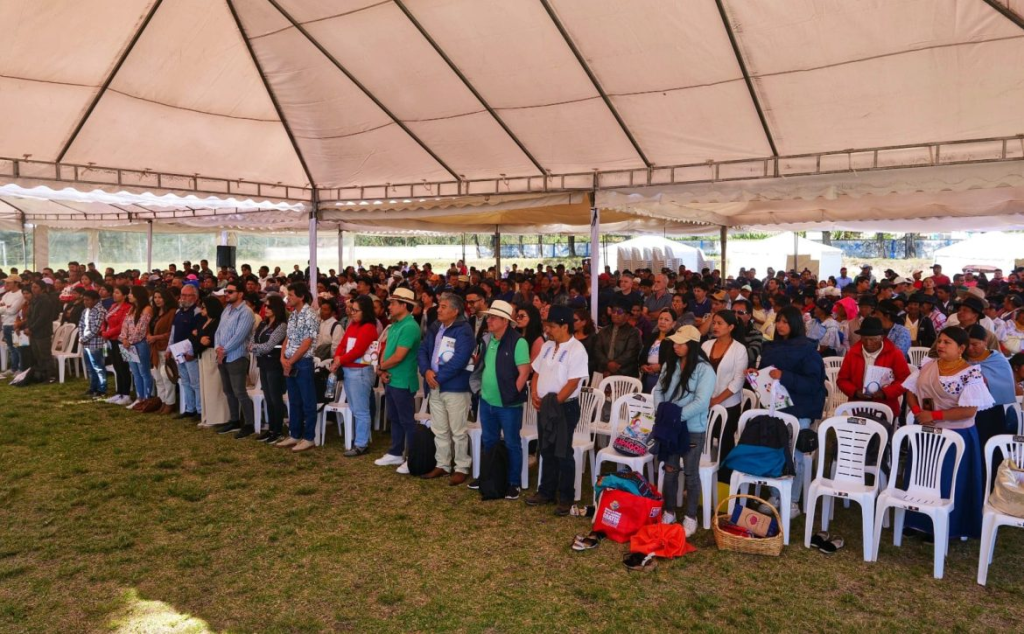
To achieve this, they established working groups to improve the often extremely precarious socio-economic situation of the women and to integrate them into the process. For example, illiterate women participated through a system of fruits and everyday objects categorized by shape and color to enhance their understanding. Thanks to targeted measures, 65% of the 1,667 women involved were able to learn to read and write within two years of implementation. The canton of Cotacachi thus became the first canton recognized by the United Nations as free of illiteracy, and significant improvements were made in water sanitation, hygiene conditions, and the reduction of infant mortality to 0%.“.
You may remember the Citizens’ Convention for Climate organized in France in 2019 and 2020. It brought together 150 people, all randomly selected and theoretically representative of the diversity of French society (based on criteria such as gender, age, education level, socio-professional category, type of territory, and geographical area). The participants met six times, over three-day weekends, in Paris, at the Economic, Social and Environmental Council. The working sessions included hearings with experts offering conflicting opinions and summaries of work (from researchers, international organizations, and civil society organizations) to ensure a collective understanding of the issues, as the participants were not experts in any particular field. Most discussions took place in subgroups to allow time for exchange, create a comfortable atmosphere, and contribute to the collective output. Specialists in citizen dialogue accompanied and facilitated these exchanges, without seeking to influence them.
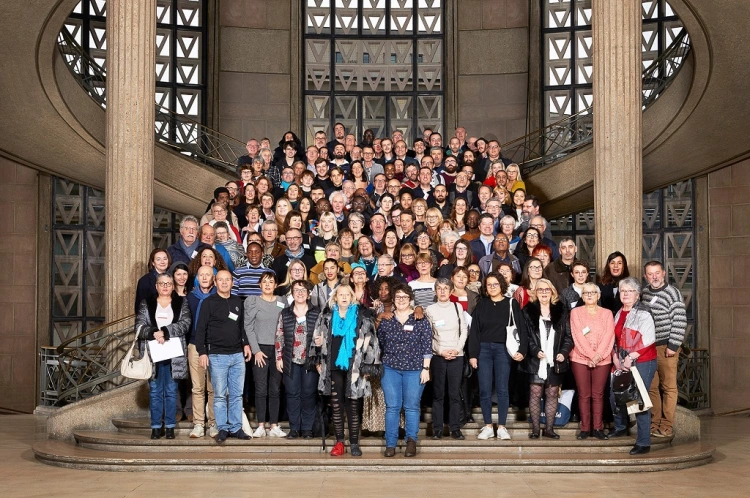
All of this represented a significant investment of time, but in the opinion of participants and climate experts, it led to a very satisfactory informed consensus and a generally relevant and operational list of measures (which was not adopted by the executive branch, but that’s another story).
Training the participating audience members is therefore a major key to success, but it does indeed represent a considerable effort.
Chloé Lachaux confirms this: “Participatory democracy, as illustrated by the case of citizens’ panels, is anything but idle chatter or gossip. It requires citizens to make an effort to understand and institutions and experts to make an effort to be transparent.”
Participatory democracy requires time and money. “Most of these participatory systems experience difficulties in maintaining mobilization over time, which seems inherent to this type of system (it was already, more than 2000 years ago, a scourge of the Athenian ecclesia, which led to a system of reimbursing those present).”
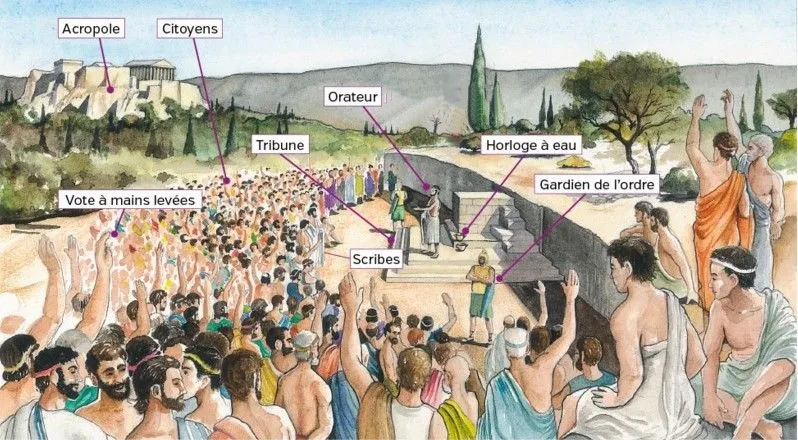
What are the best ways to get the audience involved in an improv theatre show?
Define what you can and want to do
How can we draw lessons from all this in the field of theatre?
First, we must clearly identify what makes it unique.
The theatre community is ephemeral; it brings individuals together for one to a few hours at most. In this case, it’s impossible to educate audience members over an extended period! The potential for empowerment is therefore limited.
There’s also the question of a shared project. Not everyone comes to a theatre looking for the same thing. Fundamentally, a spectator goes to the theatre to be entertained, to relax, to escape, to clear their head. They don’t go there to work! Artists work there and want to explore a theme in depth, but are most often paid for it, either through a fee or by donations.
In the current configuration of live performance, we therefore cannot expect the audience to make the same cognitive and physical investment as the artists.
This may seem obvious, but it’s worth remembering!
If we want to go further in involving the audience, we need to establish a specific social contract. This is the case in forum theatre, for example, which requires the active participation of spect-actors, to use the term coined by Augusto Boal.
Walk the tightrope
So, what ambition could we have for a participatory theatre performance?
Ideally, we need to find a way to involve the audience:
- That isn’t too taxing for them: it should remain enjoyable, not too tiring, and fun (see previous article).
- That doesn’t result in an unintelligible cacophony, where everyone’s voice overlaps with everyone else’s, creating a confusing and unpleasant sound.
- That doesn’t simply mobilize an “elite” at the expense of other spectators, regardless of individual preferences or sensitivities: everyone must genuinely have the opportunity to participate.
- That isn’t superficial either: if audience participation has no significant impact on the performance, it’s a bit of a rip-off.
As you can see, we’re dealing with a puzzle that’s not so easy to solve. Every improvisation company that creates a show must find a satisfactory combination that avoids these various pitfalls!
And the combinations can be very varied.
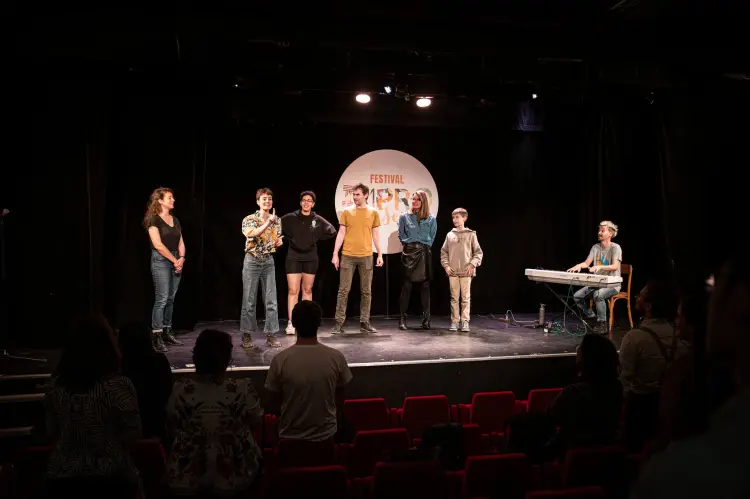
Une affaire de choix
Designing an audience participation system involves a wide range of choices.
It’s helpful to be aware of all the options available to artists, because in many cases decisions are made instinctively, without realizing we’ve made a significant choice!
Artists must decide:
- What powers can be given to the audience: voting (to choose between narrative options, the fate of participants in a competitive format, etc.), participating in character development (by defining various characteristics, from personality to age, profession, or first name), directing the story (choosing a category, deciding on an ellipsis, switching between different narrative lines, etc.), staging (how many performers are on stage, what are their positions, who can speak or must remain silent, etc.), writing (sharing an anecdote, proposing a theme, a set design, a context, a relationship between characters, a plot twist, an emotion, etc.), activating a random element (drawing a card, rolling dice, etc.), embodying characters on stage…
- When can these powers be activated: at the beginning of the show, continuously, at a few key moments, or when requested by the performers?
- How many people are given these powers: any volunteer, or a select group of people? Among the volunteers, is only one person designated by the artists?…
- How to gather suggestions: in writing before or during the performance? By asking the entire audience members on the fly? By speaking directly to a randomly chosen person?…
- How to prepare the audience: since the spectators are not used to being placed in an active role, how do we choose to prepare them to participate, or make them feel comfortable?
Sliders and levers
Consciously making each of these choices leads to the creation of a set of rules. A structure that governs the relationship between the artists and the audience. A show canvas, yes, in part, but also more broadly… A social contract!
As Hervé Charton writes, “any interaction with a given spectator involves negotiating with them the transition from listening to action—whether one is in a position to encourage or discourage it.”
The way in which the audience is informed and welcomed is fundamental. It sets the tone for the entire performance and places the spectators in certain conditions. An intimate atmosphere where anecdotes are shared among trusted individuals, a high-energy atmosphere where the whole room is encouraged to sing, shout, or boo, or something else entirely? It is the theatre company that defines all of this, through the combination of several tools: communication beforehand, the choice of music, the arrangement of seats, the lighting (is the whole room lit, or only the stage?), the reception of the audience members in the venue, the introductory speech (if there is one), the equipment of each person (who has a microphone and who does not)… Everything plays a role.
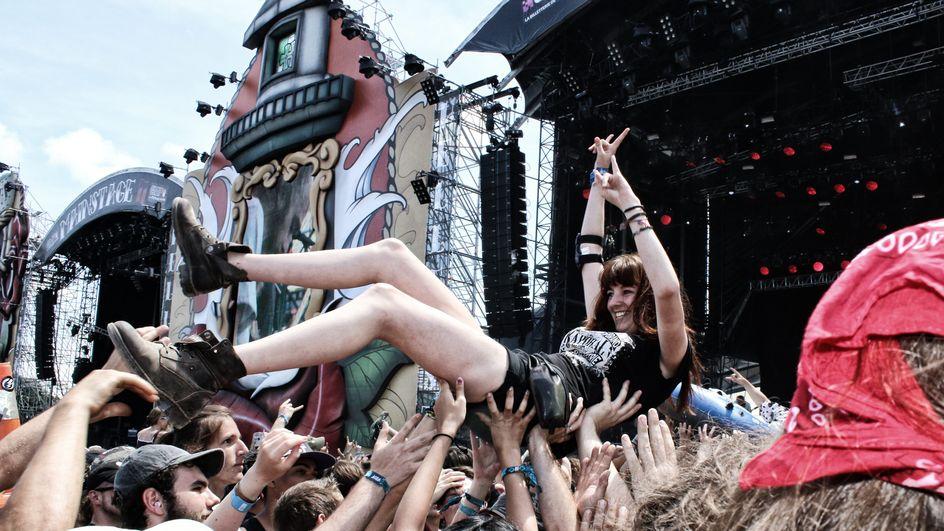
Audience participation is facilitated when the performance clearly showcases different facets of the artists: the person, the actor/writer/director, the character… and alternates between them clearly and naturally in front of the audience. This sets an example. The audience members themselves will then feel more comfortable shifting between these roles: simple members of the audience with their own experiences and individual perspectives, or any other role the company chooses to assign during the performance.
A key element in integrating the audience into the performance is, of course, the choice of role assigned to them. I personally prefer complex interactions with the spectators: discussions, sharing life stories and profound questions from those who have come to see the show. This generally generates greater authenticity, emotion, and a stronger sense of connection. There are a large number of show “formats” which rely on anecdotes from members of the audience: Playback theatre, LifeGame, Forum theatre, Minimas/Confidences, Unusual Anecdote, Neil+1/Julien+1, Trust us, SHITFORM, and I am probably leaving many others out.
Some performances require collective participation, while others choose to focus on a single audience member. This latter approach is not exclusionary for other spectators if it is clearly established that everyone has a chance to participate if they wish, and if the show highlights the experience of the chosen individual without judgment. In this case, the entire audience is drawn in, through a natural mechanism of empathy towards the person who intervenes on stage or provides a starting point for the following improvisation.
Some shows give an intra-diegetic role to the collective of spectators, leaving them free to embody it more or less actively: the audience can embody an assembly of shareholders, conspirators, participants in a demonstration, an audience at a political meeting, fans of an imaginary star, etc… I have very nice memories of shows where spectators spontaneously interpreted jungle animals, a herd of cows, an army of goblins… Bringing their touch with mischief and pride to the overall picture of the story.
Concrete examples
There’s nothing like some chosen examples to better understand the options that artists can take to integrate the spectators into their show!
Introverts/Emotions (2021-2025) and In Your Hands (2024-2025)
Introverts (later renamed Emotions) is a show created by Romuald Six and produced by his company, Cigogne Prod. Entre tes mains (In Your Hands) is a show created by Nabla Leviste with his company, Joie Impro.
Both shows showcase directed improvisation, but with the twist that the direction of the scenes is not handled by an artist; it is entrusted to the entire audience.
In Emotions, an “experimental show, the audience can, with the help of actors hidden among them, express the emotions of particularly introverted characters.” Specifically, the audience is divided into several groups seated next to an actor who embodies a specific emotion. When they feel the urge, the audience members can touch the actor’s shoulder, which “activates” the corresponding emotion: the actor then stands up and performs an internal monologue of the main character. This is similar to the storytelling in Pixar’s animated film Inside Out.
In Entre tes mains, the audience is given the ability to direct the troupe of actors performing on stage using four distinct sound signals (to trigger a repetition, advance the story, emphasize a point, etc.). The performers will follow these instructions once a group dynamic emerges and the audience as a whole produces a specific signal.
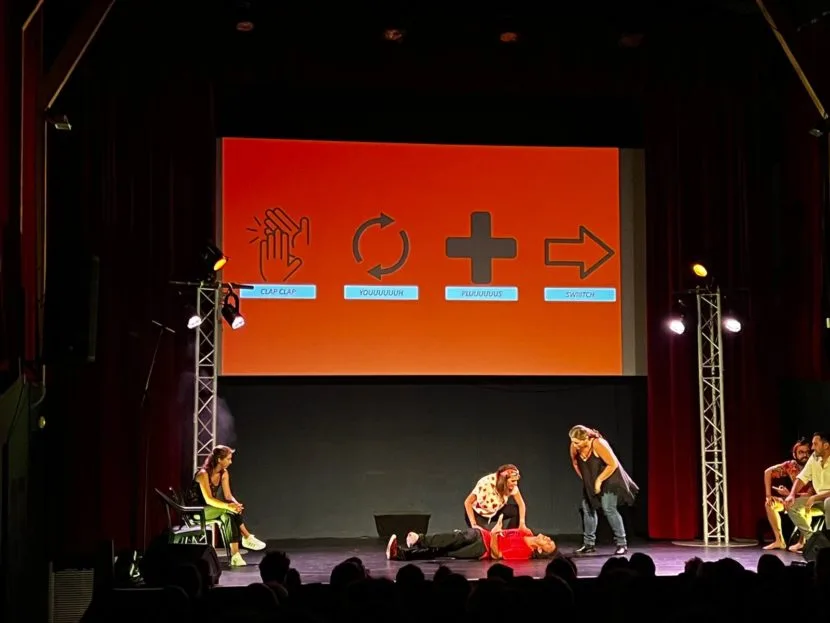
These two shows take the bold step of entrusting the audience with the staging, and in particular the pacing of the narrative. It’s a very interesting but also risky approach, because the spectatots don’t necessarily have expertise in this area. It’s therefore easy to end up with untimely interventions that make the performance “stutter.” Emotions chooses to involve the audience silently (they must touch an artist’s shoulder), and ensures a certain degree of mediation through the emotion-characters, who have autonomy in the exact timing of their stage interventions. Entre tes mains opts for collective regulation: the audience’s suggestions will only be accepted if they result from a group consensus. However, these suggestions are noisy in nature and can create a cacophony effect.
You can remember that these shows offer an exciting collective adventure, but not necessarily a relaxing one for a spectator looking for rest!
Trio (2013-2026)
There’s an unspoken rule in improvisational theater: “Never keep a volunteer from the audience on stage for more than 15 minutes.” Mark Jane mischievously chooses to break the rules and takes two audience members on a journey where they will perform an entire show for an hour!
Entrusting the roles of the main characters to two inexperienced people represents a significant risk. To manage this risk, Mark Jane uses two methods:
- He chooses the two “volunteers” in advance, by casually talking with the audience members before the performance. This is his method to identify friendly people who aren’t too introverted and are entirely new to improvisation. Indeed, as he likes to point out, “only two kinds of people are crazy enough to volunteer: improvisers and idiots” (which can be considered synonyms in this type of situation 😉 )
- Through the role of the narrator and of all the secondary characters, Mark handles most of the narrative construction, thus putting the volunteers at ease and giving them safe spaces for spontaneous expression.
Don(a) Juan(e) (2013)
Dona Juane – The Match, is a partially improvised theatrical performance directed by Cyril Boccara as part of the Laboratory for Creative, Sympathetic, and Engaged Actors (LACSE) in Lyon in 2013.
It was an adaptation of Molière’s Don Juan. Hervé Charton, who contributed to the production, explains that “All the male and female roles were reversed to give the text a subversive and critical force. It was also staged as a sporting event, during which the audience, from the moment they entered, had to choose between two sides: the Righteous and the Free; the former believe in the virtue of laws, the latter rely solely on themselves.”
As with the Quebecois creators of the improv match, the company opted for a sporting setting to free the audience from their theatrical gravitas.
“This setup allowed for a constant exchange between the actors and the audience around major contemporary issues (relationships to religion, family, consumerism, etc.). [The spectators] physically choose their side: the auditorium is divided in two, the Righteous on the left and the Free Ones on the right.
Two worldviews, two points of view that significantly influence how they perceive the scenes from Don Juan that the actors perform. Thanks to the sporting setting, the spectators are very playful from the start; in fact, we sometimes had difficulty getting them to listen attentively in the opening moments of the performance. The very powerful setting and the allocation of roles naturally place the audience at a very high level of engagement.”
The company must find the right balance between actively involving the audience in the performance and creating a joyful yet chaotic mess. To achieve this, a set of rules has been established: “The moments when [the audience members] can participate are structured: firstly, during coaching sessions, before scenes and sometimes during them, where they can give the actor (suggested) feedback on their performance, their approach to the text, or simply encourage them as one would a sportsman; secondly, during audience duels, where the referee creates a short debate between the two teams. Most of the time, these moments don’t require them to act anything out: they can express their opinions, argue, and speak in their own right – except, of course, when it comes to praising the actor, where each audience member acts as part of a team. But sometimes, some people get caught up in the game, and thus amuse themselves by defending positions that are not their own, by playing at being someone else.”
Shitform (2019-2025)
Members of SHITFORM refuse to give this show a definitive description, as it is intended to remain irreducibly vivid, multifaceted and unpredictable. In the Dadaist or gently Punk spirit that characterizes it, a SHITFORM performance will only be considered successful by the company members if the session has managed to take them where they didn’t expect to go.
As paradoxical as it may seem, SHITFORM does have some constants, particularly the principle of crafting the show with the help of the audience. This translates into two main tendencies:
- A SHITFORM performance generally begins with a discussion with the audience members, where the performers share their current state of mind, recent experiences, or ask questions that come to their mind. The resulting exchange gives then rise to an hour of freeform performance that incorporates these diverse inspirations.
- Any audience reaction, contribution of any kind, or characteristic noticed by the troupe has a good chance of being amplified and integrated into the show. For example, the performances at the Paris Improvisation Festival drew on the festival’s specific context: with many artists present in the audience, the show incorporated them into its narrative. An improvisational pianist was invited on stage to accompany the actors, as a keyboard had remained on stage from the previous performance. A contact improvisation demonstration was integrated into the storyline because an audience member had shared her experience during the opening discussion, the festival photographer was brought on stage upon her arrival, and so on.
That’s the end of this long article, and I’m too lazy to write a killer punchline. Dear audience, I trust you to synthesize this exploration in your brilliant minds, and who knows, maybe even keep something interesting for your next live performance experience!

Further reading (in French) :
Books :
- Jacob Levi Moreno – Le théâtre de la spontanéité (première édition 1923) – ouvrage malheureusement épuisé. J’ai pu consulter un exemplaire d’une édition en anglais datant de 1947 généreusement prêté par Nabla Leviste.
- Hervé Charton – Alain Knapp et la liberté dans l’improvisation théâtrale : Canaliser ou émanciper (2017)
- Samuel Berger – Improvisation Libre ! (2024)
Websites on Improv and Theatre
- L’improvisation est-elle un art démocratique ?
- Cher public
- Black Stories Impro – Le public en improvisation
- Le théâtre de rue – La mobilité du spectateur
Websites on participatory democraty
- ENS Lyon – La Démocratie Participative – entretien avec Loic Blondiaux
- Vie-publique.fr – La démocratie participative par Loic Blondiaux
- Alice Mazeaud – La démocratie participative, une professionnalisation sans démocratisation
- Démocratie et participation – Groupement d’intérêt scientifique
- La revue de la démocratie – La démocratie participative
- Enjeux, difficultés et perspectives de la démocratie participative : une synthèse des travaux de la Rencontre mondiale Démocratie Participative (2007)
- La « démocratie participative » : état des lieux et premiers éléments de bilan
Leave a Reply